For most people (particularly men) who follow motorsport, it's a lonely pursuit. Unless they have equally enthusiastic friends who are into the sport, they're forced to find internet forums where they can have rewarding, meaningful discussions and engage in discourse about their hobby. I can imagine this could get frustrating.
Luckily for me, that's not the case. When I first met my partner K nine years ago, there was little indication that she had any interest in any sport, never mind motor racing. She didn't even have a TV, let alone cable and she'd never seen the Speedvision channel. A typical situation could have developed where one partner learns to tolerate the interests of another, but in this case something strange happened.
Straight off the bat, she developed a fondness for my cranky but lovable Alfa Romeo Milano. This was a good start. Then she began to come to races, beginning with a trip to the Wine Country Classic historic races at Sears Point. That weekend was brutally hot and could so easily have turned her off racing forever. It didn't, perhaps because historic racing presents such a friendly, low-key environment or maybe because she was able to witness first-hand my enthusiasm.
When I bought a motorcycle she was envious, having had a certain amount of experience in hanging out with the messenger biking crowd here in SF, as well as having learned to ride many years ago. It wasn't long before she was also on two wheels again. As my interest in motorcycles grew, so did my interest in motorcycle racing, so she was able to share in the process of learning about this new side of the sport.
It wasn't too hard a sell in 2002 when we went to Italy for three weeks to convince her that we needed a night in Milan (to ensure a visit to the Alfa Romeo museum the next day) and a night in Modena so we had time to visit Ferrari. She loved the Alfa facility (which felt more like a private collection) but was less excited about Ferrari, which was more of tourist trap.
Back in the US my interest in rallying began to increase, and before long I'd had a chance to go to the WRC event in Sweden which convinced me to learn how to co-drive. My first event saw K come along to work as a timing marshal. Despite the fact she stood on the side of a mountain in pouring rain for hours on end she continued to enjoy rallying. It was at this point that she revealed her mother had been a co-driver many years back. Aha! So it's in the genes! Now everything started to make sense....
Late in 2003 we both went to the WRC event in Wales. This was surely going to be the make-or-break moment. As we stood in freezing fog on the Rhondda stage on Sunday morning, with her favourite driver Carlos Sainz out of the rally two days prior, could she still muster excitement and enthusiasm? The answer came from behind a tightly-drawn hooded rain jacket... "yes!" Pretty soon she was joining the annual pilgrimage to the July bike race at Laguna Seca, initially World Superbike, then MotoGP for the last four years, each year educating whichever newcomers had joined us that year.
It was only a matter of time before she came with me on the ultimate racing trip... a visit to the Le Mans 24 Hours. Sadly, the gods decided that since she was clearly able to cope with wet motorsport events, it would rain like the devil on Le Mans in 2007. Once again she kept her chin up, and was rewarded with a great time and apart from the first and last couple of hours, a dry race (and a dry pitwalk on the Friday, evidenced in the picture below). It was quite a step up from our annual Le Mans weekend barbecues back in San Francisco which she'd taken to leading the arrangement of.
She was even brave enough to come to see NASCAR this year. She got a very good look at Michael Waltrip:
So, where to next for my racing partner-in-crime? Well, after we take the plunge of actually becoming married, she can look forward to a little high-speed action herself, perhaps beginning with an autocross and then moving to some track days, now that we have a car worthy of such pursuits. If past experience is anything to go by, I should be ready to start buying tyres on a regular basis, as she proceeds to become equally excited by engaging in some on-track fun as I have been.
Monday, July 21, 2008
A racing companion


Monday, June 30, 2008
NASCAR first-timer's report
I popped my NASCAR cherry last weekend, by going up to Infineon not just once, but twice.
Saturday morning I went up with a friend who does some design work for one of the drivers and had managed to snag us a couple of credentials. Having free entry makes it so much easier to leave early and not feel weird about it which was exactly our plan. Being on motorcycles alos made things easier since we could enter the main gate and park right next to the paddock (good tip if you're ever planning on going to Infineon).
When we arrived we immediately got a close-up of the cars at pit-in, where the entrance to the paddock was. They looked very, very big, projecting an impressive physical presence thanks to the brightly coloured liveries. Unfortunately, our supposed "all access" passes were no good whilst the Sprint Cup cars were on track. We'd have to wait until noon, when they were done, to get into the paddock area. In the meantime we took a stroll around the vendor area and then sat in the grandstands to watch practice and happy hour. It was pretty cool stuff, the cars seeming to be reaching high speeds in spite of themselves. One particular view, of the middle of the esses complex, had the cars loading up their left side over a small crest, the weight visibly shifting. The noise was also pretty spectacular, reminiscent of Australian V8 Supercars. Speaking of which, former Aussie V8 champ Marcos Ambrose was making his first Sprint Cup start, and had qualified an impressive 8th alongside fellow former road racer Robby Gordon. The field was actually very well stocked with road course veterans, including Scott Pruett, Max Papis, Ron Fellows and Boris Said. Once the cars were finished with their sessions we were allowed into the Sprint Cup paddock area. I have never in all my life seen so many semi tractor-trailers lined up like that. It was pretty interesting. The cars themselves were mainly in the garages, although I did get a nice close-up look at Michael Waltrip's "Toyota". The quality of the construction and preparation of the cars was very high despite their relatively low-tech nature.
And that was that for Saturday.
Sunday was going to be different, mainly due to the massive amounts of people going. Once again we took the bikes and once again got parked pretty close to the track, with no major traffic issue going in. Our pit walk passes were great, allowing us to get close to virtually all the cars, as well as view the track from the hot pit area.
After a stroll around the merchandise area (impressive but nothing like the massive merch presence at Bathurst) we grabbed some lunch and headed for our seats at turn two. The pre-race was a bit of a drawn out affair but allowed everyone a chance to cheers for / boo their favorite / least favorite driver, which was good fun. Finally the race got underway, as 43 cars charged through the corner in front of us, amazingly without incident. It was quite a sight but (sorry for constant comparison to Bathurst, can't help it) nothing like as cool as a field of V8 Supercars.
The race unfolded in a sort of endurance-race fashion, as I found myself watching gaps and tracking strategy. The details of the race can be found elsewhere on the web but no-one will have a picture of this guy, the archetypal Dale Jr. fan, who raised his fist in support every time Jr. went by:
When all was said and done, we watched a pretty entertaining race, marred by too many late-race cautions, in which none of the road course specialists did well. It was a good day's racing though, made better by a painless exit from the track. Infineon clearly know how to handle traffic. Take that Laguna!
Friday, June 20, 2008
Becoming NASCAR Nation

Yes, it's true: I get to go to my first NASCAR race this weekend. I'll admit it's not a real NASCAR race since it features that very strange animal, a right-hand corner. Still, NASCAR put it on the Sprint Cup schedule so the drivers' loss is my gain...
What can I expect? It's hard to say when you're going to NASCAR in wine country. I'm sure there will be plenty of people there who aren't racing fans. Many of NASCAR's newer, bigger sponsors can be found in nearby Silicon Valley or elsewhere in the Bay Area, and this event serves as a big hospitality opportunity for them. I'm sure whatever local redneckery there is in Northern California will also decide to take their cars off the blocks in the front yard and come too. Then there's the gentrified WT crowd - these are the folks who make very good money as contractors or unionized workers and who buy those awful big pink tract homes with fake hacienda roof tiles in Bay Area sprawl communities like Tracy, Gilroy, American Canyon and Rohnert Park and who fill them with toy haulers, GMC Suburbans, dirt bikes and kids, whilst they always make sure to vote republican and make fun of San Francisco. I'm guessing that will be the bulk of the crowd since I see so goddamn many of these people as I travel around here.
So, a little like Bathurst then...
The similarities to Mount Panorama's "Great Race" may not stop there. We're dealing with an event of massive magnitude, the biggest sporting event west of the Rockies in fact, at a race track that dances up and down a hillside to the tune of a massive field of entries. The cars are not dissimilar either: pushrod V8s powering sedan-like chassis that bear little to no resemblance mechanically to the cars they're supposed to be based on. To be fair, NASCAR is much worse in this regard - at least V8 Supercars must start with a stock shell and chassis.
Like Bathurst, the race often turns on strategy. It's about 3 laps short of being a two-stop race, but the certainty of cautions opens the door to various strategies since gaining track position at Sears Point is so much harder than at most ovals.
I also expect outrageous traffic headaches going both in and out, so much so that my girlfriend and I are trying to figure out how to take our motorcycles, even though we have a third person coming with us. Traffic in that part of the Bay Area can be ferocious on Sunday afternoons at the best of times, so a little lane-splitting might come in handy.
Expect a full report next week.
Saturday, February 16, 2008
The road course / NASCAR crossover trend
Is this a good thing for racing? I'm still trying to decide whether it's okay that road course racing genres losing their drivers to NASCAR is something I support. During NASCAR's Daytona Speedweek Juan Montoya, Dario Franchitti, Robby Gordon, AJ Allmendinger, Jacques Villeneuve, Patrick Carpentier, Boris Said, Marcos Ambrose, Andy Lally and Colin Braun all have raced in one of the three categories.
On the one hand it could be argued that this crossing of lines signifies that NASCAR is not really so different to any other form of racing, and if that's true then it may only be a matter of time before the wealth (TV time, sponsorship and media coverage) is shared more evenly with other championships.
But you could also say that it's an admission that NASCAR is really the biggest, most important form of racing on the planet.
On the flipside, it's nice to see NASCAR's top stars in the Daytona 24 Hours. It's a shame that NASCAR's schedule is so full, otherwise we might have some hope of seeing more such appearances. I'd love to see Jimmie Johnson in a Corvette at Le Mans!
Anyway, with all these interesting road-course refugees, I'm certainly paying more attention than I otherwise would. Having said that, when faced with spending the afternoon drinking beer in the sunshine with friends at San Francisco's legendary Zeitgeist or watching the Daytona 500, I'm going to skip the couch/TV option. Had Boris Said or Patrick Carpentier made the big show, the decision would have been more difficult...
Wednesday, November 28, 2007
Sad Indy 500 fact
I was just listening to Globecast 0157's NASCAR review show and their North American correspondent Declan Brennan revealed this very sad fact:
"Next year there will be more past Indy 500 champions racing at the Daytona 500 than at the Indy 500."
Despite this, NASCAR's TV ratings continue to fall, as do those of ChampCar and the IRL. About the only US motorsport gaining viewers is the ALMS, but how many Indy 500 champions will be in that next year, I wonder?
Monday, October 29, 2007
Boris Said - rocker in disguise
I was lucky enough to see Serj Tankian, lead singer of politico-rockers System of a Down, play a show last night in support of his debut solo record. So it's time for another lookalike post (the last one was here)
Serj Tankian - singer and activist:
Boris Said - sometime NASCAR driver and all around fast dude:
Monday, October 22, 2007
Live timing = more interesting
Shock horror: I watched an F1 race yesterday (Clive, you'd be so proud...)
Call me a fairweather F1 fan, you'd be right, but this race was rather important, and had the added bonus of not being at the bum-crack of dawn. When you watch live you can pull up the live timing and scoring from the Formula 1 website and I won't lie when I say that watching this was in some ways more interesting than watching the TV. I'm not trying to bash F1, but I say this to illustrate something that's critical for those involved in racing to realize:
Beyond the spectacle of cars or bikes moving fast, what draws people to racing is the competition, and a genre of racing that best highlights the competition is a genre that will be successful.
This is easy for some racing: World Superbike or British Touring Cars for example have constant action between leaders, and the battles are clear to see using nothing but TV as a communication medium. But in something like the American Le Mans Series, or even Formula 1, where large gaps open up between competitors, live timing and scoring can be a lifeline. As I watched the F1 race yesterday I was completely captivated by the scoring, letting out of whoops of joy every time a purple number showed up indicating a fastest sector time, or even seeing green numbers that showed a driver was putting in their personal best times. Such simple presentation made it much easier to follow how the race was unfolding, and instead of watching 90 minutes of cars that appeared to be one long unchanging train with large gaps, the subtleties of the drama became obvious.
Following the progress of young Lewis Hamilton as he clawed back from 18th place was much like what I'd been doing the day before, when I sat in the media centre at Laguna Seca watching the ALMS race. My focus was on the dramatic recovery of the Andretti-Green Acura which came from two laps down to just 30 seconds off the lead of the race in four hours. It was a picture best painted by timing and scoring, and the advantage of being in the media centre was that it was real-time, as opposed to the aggregated version that's online and is often delayed.
MotoGP timing is a model for many other racing series, especially in qualifying, where fast sector times are illustrated by coloured "helmets", and online users can check the progress of riders in real time, sector by sector.
Whatever the mechanism, any technology that more clearly communicates the competition is going to make for a more compelling product. It's an area I expect to see utilized ever more comprehensively. For any race series that wants to see the possibilities, NASCAR's system is perhaps the most highly developed, with GPS tracking in every car allowing for a computerized image to be presented, along with driver communications and timing that shows the progress of the driver in a plus or minus format over the current fastest time or leader. Fascinating stuff indeed, although perhaps edging into "information overload" territory. For now, Formula 1's simple yet effective system is for me the benchmark if for no other reason in that it made the race more enjoyable to watch. And that has to be the bottom line for any such system.
Thursday, August 09, 2007
Are we close to an Australian win in NASCAR?
 Regular visitors to this blog will know that I've been following the progress of Australian V8 Supercars double-champion Marcos Ambrose in his transition to NASCAR. He is now in his second season in the USA, having competed last year in the Craftsman Truck Series, before stepping up to the Busch Series this year.
Many people expected to see Marcos make a couple of wild-card entries in the top-tier Nextel Cup when that championship arrived at the season's two road courses. The first, at Infineon Raceway back in June, didn't work out, so expectation was high that he'd get his chance at Watkins Glen this coming weekend. Sadly, funding issues seemed to consign that plan to the scrap heap. Until two days ago, that is....
Marcos was expected to run very well in the three Busch races scheduled for road courses. Back in March at the Autodromo Hermanos Rodriguez in Mexico he finished a creditable eighth in only his third Busch race. Three of the drivers ahead of him were also road-course veterens: Boris Said, Scott Pruett and controversial winner Juan Pablo Montoya (who had to nerf off Pruett to secure the victory).
Last weekend the Busch Series headed to the Circuit Gilles Villeneuve in Canada. Ambrose was dominant for much of the race, despite being up against other road-course specialists such as Ron Fellows, Patrick Carpentier, Andy Pilgrim and Pruett. However, late in the race, one of racing's top all-rounders, Robby Gordon, attempted a pass on the Aussie. During the pass, Gordon got turned around. When the caution flags came out for an unrelated incident, Gordon returned the favour, costing Ambrose the win. An argument with NASCAR over where he should be in line resulted in Gordon's exclusion from the Busch results and ban from the next day's Nextel Cup race in Pocono. Ambrose recovered to 7th, which was disappointing considering he was a sure thing for the victory.
It was Tuesday that the big news came through: Robby Gordon had offered a seat to Marcos Ambrose in his second car for the Nextel Cup race at Watkins Glen. It seemed extremely strange, given how furious Gordon had been about the events in Canada. Upon closer inspection though, it makes some sense. Gordon and Ambrose are actually rather good friends, and had made plans to go fishing together prior to the weekend. Robby also probably realized that this gesture might help his standing within the NASCAR community, and repair the damage he did to his reputation in taking the win away from the likeable Australian. Furthermore, there's a chance that Ambrose can run very well, despite it being his first race in the top class (on road courses, Busch and Nextel cars are not too dissimilar in behavior). It's not too difficult to put together a sponsor package when the sponsor can be shown that the chances of decent exposure are very high. If Marcos does indeed run well on Sunday, Camping World will be very pleased with their investment.
As we've come to expect from such a pleasant guy, Marcos' response to the odd turn of events was typically intelligent and conciliatory: “A bit of old outback Australian culture involved playing a game of Australian football, having a fight and then heading to the pub together for a beer. I guess this is a bit like that.”
Ambrose will also be running on Saturday in the Busch race, which he also goes into as one of the favourites.
Best of luck to him for both events...
Monday, April 30, 2007
Pitbox positioning
I've been thinking about pitstops lately, after watching the dynamics of a pitlane unfold in V8 Supercar racing.
For motorsports that require pitstops and have either pitstop windows or frequent full-course cautions, the possibility of a busy pitlane is to be expected. In these situations, is it better to be at the start, middle or end of the pitlane?
Initially I decided that a position at the start of the pitlane is the most beneficial. The biggest factor in deciding this is that right of way always goes to cars already travelling down the pitlane. If a car is coming, a stopped car must wait for it to pass. The crew member in charge of releasing the car will (should) always err on the side of caution. The car at the end of the pitlane will have the highest likelihood of having to wait for cars that have already stopped.
But hang on a moment.... The car in the first pitbox still has to wait for cars when it wants to leave - only this time it's those that have not yet gotten to their pit. Oftentimes cars will bunch up at pit entry, making departure for the car at pit-in even more difficult.
One good thing with having that first pitbox is that you're guaranteed not to be blocked in by a car that has already stopped in the pitbox before yours. This can make or break a race.
One other consideration: just like safety-car periods, pitstops always have a greater potential for gain for those at the back of the field. The worst place to be (in theory) is first (although obviously first is the place you always want to be anyway LOL!)
So what is my answer? Well, I'd say on-track strategy ultimately plays a much bigger role, and that hitting the pits when there's not much traffic is the ideal situation. Not always possible, mind you, especially if it's a usefully timed full-course caution period, but in V8 Supercars for example, I'd always choose to wait for the third lap of the pit window than the first. The biggest collateral gain with that is that an empty pitlane is a safe pitlane, and that's surely an important consideration that often gets ignored. Witness the chaos of a NASCAR pitlane during a caution period, and think about how many more stories you hear about NASCAR crew members who get injured than crew members in other forms of racing...
Monday, March 26, 2007
Bloggers are always one step ahead
Not wishing to blow my own horn, but it seems I beat mainstream US racing magazine Racer to the punch on suggesting franchising as a way to address the issues with NASCAR's current qualifying system. You can see the article here.
Not that there's anything wrong with Racer, far from it actually - I recently subscribed to it, after being pleasantly surprised at the high standard of journalism from an American magazine. I have one other US subscription, and that is to Road Racer X, a great motorcycle racing rag.
Tuesday, March 06, 2007
NASCAR's Mexican debacle
I've been left with a rather bad taste in my mouth after watching Juan Pablo Montoya's maiden NASCAR victory this weekend. The fact that it was on a road-course was appealing to me, so I was looking forward to seeing something new.
It all started rather well, with most of the top road-racers (Boris Said, Scott Pruett, Ron Fellows, Marcos Ambrose, Adrian Fernandez and Montoya) running near the front, with some close racing. Bear in mind that the first race of the Aussie V8 Supercar season was still fresh in my mind, with it's dramatic V8 stock car action, so comparisons were inevitable.
As the race progressed I began to become aware of how dog-slow these cars were. Those being driven by oval racers were especially pokey, but even with a quick road-racer behind the wheel these things just looked rather boring. I had hoped to witness an Aussie-style race full of door-banging action at speeds that would seem far too high for such big, unwieldy beasts.
The worst was yet to come: Montoya's car suffered a fuel hose failure during a pit-stop, requiring him to make an additional green-flag stop. This put him back in 21st position, from which he started to fight back. Right around now a series of seemingly endless yellow-flag periods begun, certainly helping the #42 car in its quest to regain the lead. Finally he got back up to second position behind his team-mate Scott Pruett at another of the unnumerable restarts. Team boss Chip Ganassi had moments before told ESPN2 that their were no team orders except "don't crash into your team-mate." So what does Montoya do? He tries a "there's no way you'll make it" pass on Pruett and takes the poor guy out. Montoya ended up in the lead, Pruett in 17th.
My irritation with this race was due to a number of reasons: firstly, it was clear that Montoya was the quickest car out there, and had a number of laps remaining to make that pass. Instead he let his impatience get the better of him. I expected much more from such an experienced driver.
Secondly, it's all very well trying a risky pass, but you never do that to your team-mate - you always hold a little something in reserve when they're involved.
Thirdly, Montoya made everyone else in the field look stupid by carving his way back from 21st. I don't believe this was good for the sport because it basically showed how average the rest of the drivers were.
Fourth, in any other form of motor-racing, this pass would have incurred a drive-through penalty. The fact it didn't leads me to believe that NASCAR were colluding to make sure Montoya got the win (it's newsworthy, and would help attract the interest of Latin-American race fans).
Fifth, Montoya's crew-chief had been making deals with crew-chiefs of competitors as the fight-back was progressing, basically saying "you have no chance of beating Juan, how about you move over to let him by so no-one gets into any drama?" By my estimation, racing is supposed to happen on the track, not as a result of conversations between crew-chiefs. If these deals hadn't been made, perhaps Montoya might have taken longer to hit the front (if he made it at all) and we'd have had a more realistic result. I don't believe this win was a legitimate one, and that can only be a bad thing for NASCAR.
I watched this race with as open a mind as possible - I wanted to be captivated in the same way that the Aussie racing holds my attention. Instead I saw what appeared to be a bunch of amateurs driving slow cars, with a winner that had to resort to cheating and collusion to take the victory.
Wednesday, February 28, 2007
Busch turns right
The NASCAR Busch Series is in Mexico this weekend for one of its two road course events of the season. Both are outside the USA.
What's tantalising about this race is the number of drivers with strong road-racing backgrounds:
- Marcus Ambrose - Australian V8 Supercar champion, and strong performer in last season's Craftsman Truck Series.
- Scott Pruett - Known these days for sportscar racing, and has good experience at the Mexico City track. Was also very successful in CART.
- Adrian Fernandez - Lots of success in US open-wheel racing, and now involved in sportscars. Is also Mexican (not sure if that helps or not).
- Boris Said - Perhaps the most successful road-racer in NASCAR recently. Qualified on pole at this event last year. He's probably got the most stock car experience of the "road-course ringers".
- Ron Fellows - Ron has been a NASCAR road-course ringer before as well as being hugely successful in sportscar racing, most recently with Corvette.
- Juan Montoya - After a decent career in F1 that included some wins, Juan is reasonably capable of turning right, and has shown he's pretty damn quick in a stock car.
- Michel Jourdain Jr. - Always "there or thereabouts" in ChampCar.
Go Boris!
Wednesday, February 21, 2007
As the car crossed the finish upside down and on fire...
...it became clear to me that every now and then NASCAR can be entertaining. If I put aside all my stereotypes and prejudices for just a moment, and reach for that zen place of being as pure a fan of racing as possible, it is possible to derive some pleasure from NASCAR.
When all was said and done, I realized that my attitude towards NASCAR form this point forwards will be very much like my approach to Formula 1. Both sports are undeniably huge, and both feature elements that I look for in any motorsport (close competition in NASCAR's case, and trailblazing technology in F1). However, both leave me a little cold. The difference between me as a racing fan this time two weeks ago and now is that I've added a form of racing to my list of genres that I understand but won't cancel things in order to watch.
For example, on Saturday March 17th, I will not be making any plans to do anything, because the Sebring 12 Hours in on. It's a "must-see" event for me. However, the weekend before, I won't be making time for the NASCAR race at Atlanta, and the day after I won't be looking to stay home to watch the Australian Grand Prix. But if I happened to be home doing nothing, and either of those races were on the TV, I could happily watch them and know who the drivers were and what was going on. I believe that makes me more of a well-rounded motorsport follower than I was before. My path to self-betterment continues....
Friday, February 16, 2007
NASCAR issues for newbies: Qualifying
Getting into a NASCAR Nextel Cup race can be either very easy or supremely difficult. This is because of something called "owners points". It rewards teams that have been consistent in the championship, by giving the top 35 cars at any given time a guaranteed spot in the race. Note that it's not top 35 drivers. A team owener can have a different driver every race, but it will still be about total points accumlated by that car so far that season. For the first five races of the season, total owner points for the previous season are counted.
Teams that go out each week and race are more likely to be in the top 35 than those that are "part-timers". Perhaps these teams don't have the budget for a full-season. Or perhaps they only enter those races that are in close proximity to their workshop. Whatever the reason is, their inability to commit to a full season carries a price, and that price is not being guaranteed a spot for the race.
There's a problem though: there's 51 teams that are full-time in 2007. So even if a team has committed to the whole season, they still may not get in. That's an awful lot of money, time and commitment at risk, since on any given day 8 or more full-time teams will be going home after qualifying. If there's a weekend where a lot of part-time teams entering, it can be even harder. This weekend's Daytona 500 saw 60 entries. Of those, 35 were guaranteed a spot. The remaining 8 spots were taken by 2 part-time teams and 6 full-time teams. Seven part-time teams went home, but a staggering ten full-time teams didn't make it in either.
And when a team misses out on one race, it gets progressively harder to get in in future. Say you're 36th in owner points, 1 point ahead of 37th. They make it into a race and you don't. In that weekend, they'll make enough points to put you into 37th. Now you're even further away from the magic 35th position. You'll have to qualify again next week. Say you miss again, you'll slip even further. Even if you do succeed in getting in to a couple of races, it takes time to get back into the top 35, and each time you miss out on qualifying you're back a step. As soon as you make it into the top 35, the chances of earning enough points at each race to stay there increase dramatically. Just like the modern American nightmare, the rich get richer and the poor get poorer. What makes it even worse is this: say you struggle through a season outside the top 35, you're guaranteed to have to qualify for the first five races next season. And as we've discovered, it's ever so easy to slip up and be playing catch-up constantly. One poor finish that drops a team outside the top 35 can sentence them to YEARS of heartache. And the less a team makes it into a race, the less likely it is that they will be able to secure sponsorship or good drivers, further adding to the downward spiral.
I've painted a grim picture, as I did on Wednesday about restrictor plate racing. So, just like Wednesday, I'll offer a solution. In this case, my solution comes from the home of Busch Series rookie Marcos Ambrose: Australia. The top stock car series down there is the V8 Supercar Championship. I talk about it frequently on this blog (they also have a second tier series, called the Fujitsu Development Series, which functions like NASCAR's Busch series). There are a finite number of spots on the V8 grid, but the teams which occupy those spots are always guaranteed a place, because each spot is franchised. To get onto the V8 grid you must buy a franchise. If a team goes out of business it may sell the franchise (which is a valuable asset) to another team or back to the governing body. Ownership of the franchise carries certain obligations, one of which is to show up at every race. If that's not possible, very large fines are levied, just like in the WRC when a manufacturer pulls out halfway through a season.
I suggest NASCAR switch to the grid franchise system. Yes, it locks out new teams from joining the championship, but if a team is sufficiently prepared to run at this top level, they probably have the money to buy out another team. There will ALWAYS be teams that are struggling and looking to perhaps get out, and cashing out their franchise makes leaving the series a more attractive proposition, than continuing on in lame-duck fashion. The franchise system protects a team's investment. The system could be tweaked slightly, perhaps to allow for 40 franchises and 3 open spots for any other team looking to enter.
Of course there will be critics of this idea that say teams that aren't performing well shouldn't be in a race. I agree, but by the same token, a team that has made the financial commitment to a full-time program shouldn't have their investment jeapordized. The current system shows too much inequity between those in the top 35 and those outside it.
One final option is a tiered qualifying approach. How about this?: the top 20 teams in owners points are guaranteed a spot. Teams 21-30 go through an additional pre-qualifying where they race for positions 21-28. The times of the slowest two go into a final pre-qualification with all remaining teams for the final 15 spots. This opens up extra spots and makes it less likely for a team to get stuck in the downward spiral situation I outlined above. Note that the final grid would determined by actual times, not by the grouping in which the time was recorded.
What do you think? Franchises, tiered qualifying or keep it like it is?
Wednesday, February 14, 2007
NASCAR issues for newbies: restrictor plate racing
I'm determined to understand NASCAR racing. I've always felt that it's not very "becoming" of a motorsports fan whose interest lies in road-racing, rallying and/or motorycles to also be into NASCAR. These are two entirely different worlds, and never the twain shall meet. However, if top sportscar guru John Hindhaugh can find something redeeming in NASCAR, then it's time I tried to do so too.
As I mentioned on Monday, despite its enormous success, NASCAR is struggling with a number of issues, none of which seem to be impacting its popularity but all of which help offer some insight into how the sport works. So I'm going to look at one such issue today: restrictor plate racing.
Engine air intake restrictors are used in many forms of motorsport. Reasons for usage vary: in Japanese SuperGT it is to retain parity and increase the chances of success for teams that are struggling (conversely, teams that do well are penalized with weight handicaps). In rallying, restrictors are used to limit performance. After the frightening speed of the Group B era, the FIA were determined that such speeds would never again be reached (they failed by the way, since current WRC cars are as quick as Group B was, albeit not as fast as they could be without restrictors).
In NASCAR, restrictors are used at two of the fastest tracks, Daytona and Talladega, to reduce performance. Without the restrictors, it's quiet reasonable that cars could lap at up to 220mph. With them, speeds are in the more reasonable 190mph range. "Sounds like a plan" you say. "What's the problem?"
The problem lies with the fact that the rules set make this a de facto spec championship. Cars are very, very similar and performance is equally similar. Engines tend to be the primary area where opportunities for performance gains lie, but when you plonk a restrictor onto the carbs most of those gains are nullified. Now you have 43 cars with almost identical performance. "That's going to make for exciting, close racing, surely?" you ask. It does. Too close. All 43 cars are now able to travel within inches of each other at 190mph, creating one big train. This train cuts through the air, allowing for speeds that would not otherwise be attainable and forbidding any car to step outside the train without incurring a massive aerodynamic penalty. Now all it takes is for one car to get a little loose, bump another car sideways, and you have the makings of a very, very big accident. This is what has happened numerous times since the restrictor plate was brought in.
Modern day NASCAR stock cars are pretty damn safe. They deform well, tend not to get airborne and drivers all wear HANS devices. But a time will come where that won't be enough, and a stationary car will be hit driver's side by a car travelling at 100mph or more. The driver will die. Case in point: the accident which claimed the life of Mark Porter in Australia last year. He was in a Ford V8 Supercar, a car built equally as strong as anything in NASCAR. Chances of a similar accident are higher when you have a situation like the one so commonplace at Daytona and Talladega.
What's the answer? I'm no expert, but it seems to me that alternate methods for slowing cars down are numerous and varied. In Formula 1 they went to narrower tyres, less aerodynamic aids and smaller engines. Until NASCAR moves on from it's 1950s technology (pushrod engines with carburettor intake) to modern overhead cam, fuel-injected units, options are limited. With fuel injection, a spec ECU would be the obvious answer, just as it is in Grand-Am's Daytona Prototype rules. For now, I'd probably lobby for smaller engines for these extremely high speed tracks. Right now, engines have a 5.9 litre capacity. If teams were required to use a non-restricted 3.5 litre V6 at these super speedways, you'd achieve close to the same speeds as you do with the larger restricted V8, but with greater diversity in performance and a reduced likelihood of these long trains of trouble.
Monday, February 12, 2007
I watched NASCAR
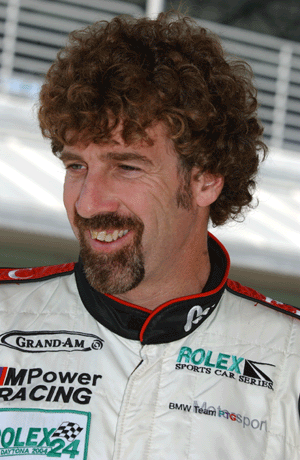 Yes, it's true. On Saturday evening I watched the Bud Shootout, primarily to cheer for top sportscar racer, stock-car interloper and all-round kickass dude Boris Said (right). I won't pretend it wasn't entertaining. The racing was close and pretty exciting, and a little studying beforehand meant that I was able to tell one car from another fairly easily (this is a somewhat important issue I've discovered when coming to a new racing series).
I learned about the bump draft. This is where two cars are in line and the one behind is going faster (due to drafting) and gives the one in front a little bump to transfer that speed and get them both going faster. How the car in front doesn't lose control in such a maneouver, I've yet to figure out.
I'm also still in the dark as to why one line around a corner may (or may not) be faster than another. Why would a driver choose to go high or low at any given moment? It's clearly not like in road-racing where you come in wide, try and get as early an apex as possible and then aim for the far curbing on exit. If I understood these things it might increase my enjoyment and make me more aware of what skills a driver is using to progress through the field.
A quick Google search on these topics brought me to a very informative blog called The Infield at That'sRacin.com. Turns out that NASCAR seems to have a number of pretty significant issues that it is dealing with, creating rather a lot of controversy. There are many critics of the current qualifying system, a lack of franchise spots on the grid, usage of restrictors at high speed ovals, the afore-mentioned bump-drafting, the angle of banking, licensing of rookies, sanctions against drivers who get a bit physical after the race... the list goes on. Regulatory issues are a common thread no matter what area of motorsport you're involved in, but just as in Formula 1, they take on gargantuan significance in a massive money-maker like NASCAR.
As we run up to the Daytona 500 this weekend, I'm going to do a little digging on NASCAR's controversies, to hopefully bring a bit more understanding of this bizarre sport to both me and anyone else more used to watching cars or bikes go right as well as left....
Monday, February 05, 2007
And people think F1 qualifying is complicated...
From the Speed Channel website:
"Daytona 500 qualifying is far and away the most complicated of any Nextel Cup race. Here’s how it works: Pole qualifying for the Daytona 500 is Sunday, Feb. 11. All the cars entered in the 500 will take two laps around the 2.5-mile Daytona International Speedway tri-oval in an attempt to win the pole for the race on Feb. 18. But unlike a traditional Nextel Cup race, Daytona 500 qualifying only sets the top two positions.
Positions 3-39 will go to the top 35 in 2006 owner points and the two highest finishers in each of the Daytona Duel 150 qualifying races on Thursday, Feb. 15. Positions 40-42 in the Daytona 500 field will go to the fastest qualifiers who don’t make it in via the Duels, while the 43rd and final position is reserved for either a past champion, or the next fastest qualifier."
So many questions... The likelihood is that the top two spots will go to cars that were in the top 35 of 2006 owner points. That leaves 33 cars to take positions 3-39, leaving four spots for those winners and runners-up in each of the Duel races. But what if the top two positions of the pole qualifying are not from the top 35 of 2006 owners points? You now have to cram all 35 of those cars into positions 3-39, leaving only two open spots. So what happens to the second-placed cars from each of the duels? Are they S.O.L.? Does it then go back to qualifying times from the Pole Qualifying, like it says above? To me it looks like you could come second in a Duel, but have a slightly iffy Pole Qualifying time and not make it into the race.
Can a NASCAR expert illuminate the situation for me?
Friday, December 01, 2006
News grab-bag
- MotoGP world champ Nicky Hayden rode the last round of the season with a broken shoulder. He has now taken time out from the testing schedule to have it fixed. Makes his title seem even more impressive!
- Top two drivers in the Australian V8 Supercar series Craig Lowndes and Rick Kelly go into the final round at Phillip Island separated by 14 points. Remarkable given that they both have more 2900 points each. Should be an absolute cracker of an event...
- Word has it that Henning Solberg will be driving for Ford's Stobart team in next years World Rally Championship.
- The AMA Superbike series will have two pasty new faces next year with the arrival of Brits James Ellison and Chaz Davies. Ellison will ride for the factory-supported privateer Corona Honda team in the Superbike class, whilst Davies will be riding in one of the 600cc classes for Celtic Racing.
- Our favorite MotoGP mechanic Liam Shubert, who left San Francisco last year to pursue his dream of working in MotoGP, has been promoted within the D'Antin Pramac team. He's now their Parts and Logistics Coordinator.
- Britain has another great white hope in Formula 1. Except he's black, which is a good thing for the sport. Lewis Hamilton, who won this year's GP2 series, has grabbed the second seat at McLaren.
- Although we don't "do" NASCAR here, it's worthwhile to note that this year's Nextel Cup championship was won by rallying fanatic and former Race of Champions participant Jimmie Johnson.
Tuesday, July 11, 2006
Montoya moves to NASCAR - why???
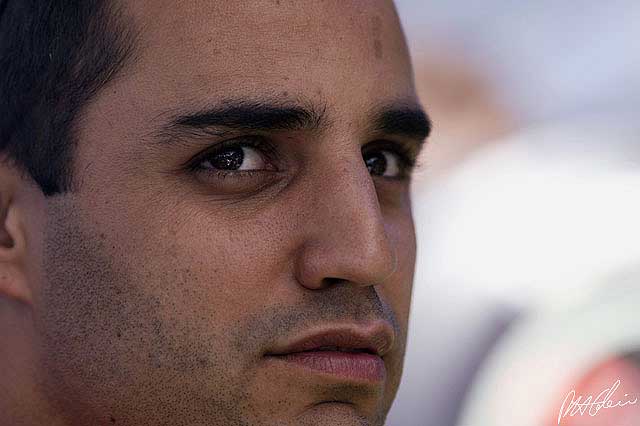 I was discussing with my partner last night what could possibly have motivated Juan-Pablo Montoya to leave Formula 1 for a ride with Chip Ganassi's NASCAR team. She wasn't suprised to see him leaving F1, with his pretty dismal record of late, but was surprised that he should go to NASCAR, putting forward sportscar racing as a suitable alternative.
But the fact is that the only other circuit racing series that rivals F1 in terms of TV coverage, sponsorship dollars and pure fan following is NASCAR. JPM is not about to take a big paycut, nor reduce his high profile, so really his options were limited.
ChampCar and IRL don't offer the level of competition, paychecks and exposure that NASCAR does, and plumping for NASCAR doesn't necessarily preclude Montoya from jumping into sportscar racing at some point in the future. There's very few high-paying rides in sportscar racing (Audi, Corvette, Aston, Porsche come to mind), and a comparatively small number of races each year (a driver wishing to run as many ALMS and LMS races as possible this year would at most race 15 times during 2005).
So as you can see, JPM didn't really have too many choices given his requirements, and I for one would love to see a road racing guy jump into stock car racing and kick very large amounts of ass (search this blog for "Marcos Ambrose"....)
Monday, June 26, 2006
Something cool about NASCAR
Will Ferrell plays a NASCAR driver in "Talladega Nights - The Ballad of Ricky Bobby". Said to be the "Anchorman" of NASCAR. Probably the best thing to look forward to is Ali G creator Sascha Baron Cohen playing a gay French Formula 1 driver....


