Having been to a couple of WRC events in the past, the issue of deciding which stages to see and where on those stages to go can be really tricky. I've got hundreds of megabytes of maps, stage descriptions and video accumulated for that very reason.
Rally Deutschland and this weekend's Vodafone Rally Portugal have attempted to solve that very issue. Not only do they put detailed maps and descriptions online (like a lot of other rallies), but they also post video of the spectator areas so that you can see the view that you can expect. Check out this superb stage overview which shows all the access points, and then go to this example spectator area page from the excellent Portugese spectator guide. There's a video link at the top, which shows a little SUV negotiating the stage.
It was just a bit of a shame that such a well-though-out and gorgeous rally dished up the same old snoozefest on the competitive side of things.
Monday, April 06, 2009
Rally spectators get the info they want


Monday, July 21, 2008
A racing companion
For most people (particularly men) who follow motorsport, it's a lonely pursuit. Unless they have equally enthusiastic friends who are into the sport, they're forced to find internet forums where they can have rewarding, meaningful discussions and engage in discourse about their hobby. I can imagine this could get frustrating.
Luckily for me, that's not the case. When I first met my partner K nine years ago, there was little indication that she had any interest in any sport, never mind motor racing. She didn't even have a TV, let alone cable and she'd never seen the Speedvision channel. A typical situation could have developed where one partner learns to tolerate the interests of another, but in this case something strange happened.
Straight off the bat, she developed a fondness for my cranky but lovable Alfa Romeo Milano. This was a good start. Then she began to come to races, beginning with a trip to the Wine Country Classic historic races at Sears Point. That weekend was brutally hot and could so easily have turned her off racing forever. It didn't, perhaps because historic racing presents such a friendly, low-key environment or maybe because she was able to witness first-hand my enthusiasm.
When I bought a motorcycle she was envious, having had a certain amount of experience in hanging out with the messenger biking crowd here in SF, as well as having learned to ride many years ago. It wasn't long before she was also on two wheels again. As my interest in motorcycles grew, so did my interest in motorcycle racing, so she was able to share in the process of learning about this new side of the sport.
It wasn't too hard a sell in 2002 when we went to Italy for three weeks to convince her that we needed a night in Milan (to ensure a visit to the Alfa Romeo museum the next day) and a night in Modena so we had time to visit Ferrari. She loved the Alfa facility (which felt more like a private collection) but was less excited about Ferrari, which was more of tourist trap.
Back in the US my interest in rallying began to increase, and before long I'd had a chance to go to the WRC event in Sweden which convinced me to learn how to co-drive. My first event saw K come along to work as a timing marshal. Despite the fact she stood on the side of a mountain in pouring rain for hours on end she continued to enjoy rallying. It was at this point that she revealed her mother had been a co-driver many years back. Aha! So it's in the genes! Now everything started to make sense....
Late in 2003 we both went to the WRC event in Wales. This was surely going to be the make-or-break moment. As we stood in freezing fog on the Rhondda stage on Sunday morning, with her favourite driver Carlos Sainz out of the rally two days prior, could she still muster excitement and enthusiasm? The answer came from behind a tightly-drawn hooded rain jacket... "yes!" Pretty soon she was joining the annual pilgrimage to the July bike race at Laguna Seca, initially World Superbike, then MotoGP for the last four years, each year educating whichever newcomers had joined us that year.
It was only a matter of time before she came with me on the ultimate racing trip... a visit to the Le Mans 24 Hours. Sadly, the gods decided that since she was clearly able to cope with wet motorsport events, it would rain like the devil on Le Mans in 2007. Once again she kept her chin up, and was rewarded with a great time and apart from the first and last couple of hours, a dry race (and a dry pitwalk on the Friday, evidenced in the picture below). It was quite a step up from our annual Le Mans weekend barbecues back in San Francisco which she'd taken to leading the arrangement of.
She was even brave enough to come to see NASCAR this year. She got a very good look at Michael Waltrip:
So, where to next for my racing partner-in-crime? Well, after we take the plunge of actually becoming married, she can look forward to a little high-speed action herself, perhaps beginning with an autocross and then moving to some track days, now that we have a car worthy of such pursuits. If past experience is anything to go by, I should be ready to start buying tyres on a regular basis, as she proceeds to become equally excited by engaging in some on-track fun as I have been.
Tuesday, January 15, 2008
RIP Ouninpohja
The world's fastest rally stage, Rally Finland's Ouninpohja, has been axed for being too fast. The maximum recommended average speed on a gravel stage is 130km/h, or 81mph.
Back in 2004, Petter Solberg blitzed the 33.01km stage in 15 minutes, 19 seconds. There's amazing video of this on Youtube (and on my hard drive LOL!). The average speed of this run came out to 129.39km/h which was too close to the maximum speed for the FIA's comfort. For 2005 and 2006, the stage was split into two, resulting in stages with 129.54km/h and 128.10km/h average speeds. Once again, Ouninpohja was too fast.
For 2007, the organizers put the stage back together, this time with three chicanes installed to dramatically affect the times. The result: Marcus Gronholm comes within 0.5 seconds of Solberg's incredible 2004 time, meaning he was effectively going MUCH faster through the bulk of the stage.
It had become clear to the organizers that although they could keep Ouninpohja within the maximum average speed numerically (just), it wasn't in the spirit of the rule, and crews, spectators and marshalls were being put at greater risk.
Which is all a great shame, because as I've mentioned on this blog before, Rally Finland and its "queen stage" are a perfect example of the true essence of stage rallying. To lose part of that is a loss for rallying the world over.
Monday, December 17, 2007
Race of Champions honors Colin McRae
We sat down to watch the Race of Champions last night, and there was no doubt that the spirit of the late Colin McRae was everywhere. All the drivers wore the Saltire on their arm and Colin's 1995 championship-winning Impreza was on display in the middle of the track for the second half of the event, driven there by his younger brother, Alistair.
It's going on 3 months now since Colin died, and I'm sure that like many people I still find it hard to believe that it ever happened. I think celebrity deaths tend to elicit a lot of initial shock that fades away rapidly, but in the case of McRae I get the impression that the motorsport community is still in the first stage of the Kubler-Ross "Five Stages of Grief" model, denial.
The Race of Champions did their bit to help the grieving process last night. Grab a tissue and check out this incredibly moving footage of the tribute:
Monday, October 29, 2007
Loeb vs. Gronholm - mistakes
After two incredibly dull tarmac rallies, this weekend's WRC event in Japan was full of drama. As it has been throughout the season, Marcus Gronholm has made mistakes when we expected them, and Seb Loeb has made them when we haven't.
Things started as we've come to expect them: a fast young Finn took early control with the terrific Jari-Matti Latvala putting in some storming early times (albeit on roads that had been swept by the championship leaders in gradually improving weather conditions). Marcus soon moved to the front, with team-mate Mikko Hirvonen lurking in contention. It all went pear-shaped on SS4, the short Rikubetsu spectator stage, when Gronholm went wide on a corner and slid down a bank. What could have been an irritating time delay turned into disaster when it was deemed that the roll cage was too badly damaged to continue. This struck me as bad luck, since the off wasn't that dramatic. Hirvonen now led, with Loeb coming from behind fast. Meanwhile Gronholm was looking at turning a 4-point lead into a 4- or 6-point deficit.
Day two looked to be the day that Seb would either cruise to consolidate an easy second, or chip away at Hirvonen and eventually take the lead. Neither happened. Loeb's ultra-efficient co-driver Daniel Elena (who some of my rally friends called T4, the latest version of the Terminator due to his robot-like skills) called a "plus-plus" instead of a "minus-minus" on one corner, sending Loeb flying off the road and out of the rally. Everything was now even again. Behind Hirvonen, some unusual names were sneaking into the top eight, as Subaru managed to lose all three cars, making way for the likes of Henning Solberg, Luis-Perez Companc, and World's Worst Son Matthew Wilson, who makes a fool of his Dad every time he gets into his WRC car. This time however he was at the sharp end.
So as it stands right now here's how things look. Let's presume Seb and Marcus finish one-two in the remaining two rallies.
1. If Seb wins both with Marcus second, they will be tied on 120 points. Seb would win the title based on the "rallies won" tie-breaker (Seb would be at 9, Marcus at 4)
2. If Seb wins one and Marcus wins one, Marcus wins the title, 122 points to 118.
3. If Marcus wins both, it'll be an easy 124 to 116 victory for him.
What is actually likely to happen is that Loeb will win in Ireland, making Rally GB a must win for both drivers. Although Marcus ran a rally in Ireland earlier this year in which he came second, Loeb has done two Irish events, both of which he won. The stages share much in common with the first day of Rally Deutschland - narrow, wooded and fast. And we all know how well Seb does in those conditions.
So we can fairly confidently expect an incredible showdown in the Welsh forests, scene of so many epic championship-deciding thrillers. I was there in 2003 when it was Solberg vs. Loeb, but in that situation Loeb had been told to hold station in second to guarantee the manufacturer's title, thereby losing the driver's crown. It was still incredibly exciting stuff in the damp, fog and rain on classic stages with names like Brechfa, Resolfen and Rhondda...
Tuesday, September 18, 2007
The meaning of legend
Indulge me for a moment as I lay out an analogy for you. As an active, professionally-trained musician I've learned over the years that success in music is not proportional to your musicianship. I worked for a year or so as a tour manager for a major-label punk-rock band. I was a much more skilled musician than any of the guys in that band, but they were the ones with the record deal, not me. As the tour rolled on , it became apparent why this was. Every night, they stepped out onto the stage and put on a great show, with fun banter, lots of jumping around, all the right rock 'n' roll moves, carefully-timed f-bombs and an air of unpredictability that keeps the crowd excited.
When I came off the road I realized I'd learned a lot, and it changed how I approached my music. The realization that the craft of music was a two-way street that involved more than just the band was a big step.
Colin McRae understood these fundamental principles. He came to understand that once you get to a certain level in motorsport you're not just in it for yourself anymore, and that even if you're not the one with the most innate talent you can still be a legend. This understanding lead him to work with Codemasters on the terrific Colin McRae Rally series of video games, that brought his name to an audience previously unfamiliar with rallying. It also manifested itself in his driving style, which was always exciting to watch, even as other drivers were using a newer, tidier approach that worked better with the modern generation of WRC cars and was clearly faster. His no-holds-barred attitude meant that rally fans always knew he was trying hard, one of the reasons he had a greater tendency to crash. This was a large part of the appeal of Colin. People love someone who never gives up, who always tries hard against apparently insurmountable odds and who would rather fail spectacularly than give up.
But most importantly, Colin's intuitive feel for dealing with people is what will live on in the hearts of everyone who ever knew him or followed his career through the media. His communication style, like his rallying, was open and honest. Colin would rather tell the truth, even if it was an unpleasant truth, than cover things up. I remember watching an interview with him after a rally in New Zealand, where a pace note issue had caused a crash: he was asked what had happened and he replied wryly "maybe you should ask the Welsh wizard", indicating his displeasure with co-driver Nicky Grist. That kind of openness is rare in professional sport, and with Colin it worked both ways. He was clearly a big fan of Travis Pastrana when he came over to compete against the freestyle motocrosser in the X-Games rally last year, and he showed it. He refused to act the "big shot" when he was up against the top American rallyists, and anyone who competed against him in either of the X-Games he took part in had nothing but good things to say about him, how he was always gracious and accomodating.
I know I just said "most importantly" at the start of the previous paragraph, but there is actually something else even more important: the fact that Colin was a husband, father and son. As tough as it is for the rallying community and for the world of sport in general to accept Colin's death, our pain is nothing compared to that of his wife Alison, his daughter Hollie and his parents Jimmy and Margaret, all of whom are facing the double tragedy of also losing Colin's son Johnny.
If there is a heaven, let's hope it's one big superspecial stage. If it is, Colin is either winning or crashing...
Monday, September 17, 2007
Colin McRae, 1968-2007
 What a tragic day for motorsport Saturday turned out to be. I'm too sad about this to write anything at the moment except my send my deepest condolences to the McRae family. There's plenty of tributes on the web. I'll write more later.
Monday, September 03, 2007
Edge of the seat
Although I abandoned "weekend review" posts last year, it seems only right that I should reflect on a cracking weekend's racing in the ALMS and WRC. Having a three-day weekend to enjoy it also helped, especially with the lovely weather we've had here in San Francisco (finally...)
Marcus Gronholm and Seb Loeb delivered a complete nail-biter of a rally in New Zealand, featuring the closest finish ever in the history of the World Rally Championship, a scant 0.3 seconds. This is not how rallies are supposed to work. Generally you expect the bloke in second place to back off in the last few stages once it's clear he's not going to catch the leader. Not yesterday...
Marcus started the day about one second behind the Frenchman, and the lead see-sawed until the final stage. Seb went in 0.7 seconds behind, claimed back 0.4 seconds and ended up just missing out on the victory. It now leaves him one rally win (10 points) behind Gronholm. The balance of power is finely poised. The next two events are tarmac rallies that typically favour Seb: Catalunya and Corsica. After that is Rally Japan, which could go either way. The penultimate round is in Ireland. Although the surface is tarmac, and in theory should be best suited to Loeb, both drivers have done exploratory rallies in the Emerald Isle, making for a much more even playing field. The final rally will be in Wales, with the slippery gravel that might just be more Gronholm's cup of tea. The key for both of them will be to keep it on the road. If Marcus has a DNF with a corresponding win for Seb, they'll be even on points. If the opposite occurs, Seb might just have to kiss the championship goodbye.
Although the setting couldn't have been more different, the American Le Mans race in Detroit was very nearly as exciting as the WRC in New Zealand.
As much as I dislike seeing Audi win, due to their massive domination in Le Mans racing, I'm not too happy seeing them endure such a long losing streak (now 8 straight races). Part of it is down to the fact they've had some bad luck, but the bigger issue is that according to the rules, they shouldn't be losing. LMP2 cars, like the Penske Porsches that are so successful right now, are not supposed to win. They can be expected to challenge very occasionally on tight, slow tracks, but according to the ACO's rule book, LMP1 cars should rarely lose, especially when they are as highly-developed as the Audi R10.
Porsche were too frightened of Audi to enter LMP1. This was a bad decision for the fans who wanted to see a straight fight. To see Porsche win with an LMP2 car is like watching a badly-behaved kid get rewarded for beating up a classmate.
However, it has made for some great racing, in a season where it was expected that Audi would win everything! In Detroit on Saturday, where it was expected the Porsches would take advantage of the tight street layout, Audi looked to be taking a surprise win. However, with two laps to go, Romain Dumas in the Porsche managed to make a pass on Emanuele Pirro's Audi, and held on for the win. Pirro will have to take the blame after carelessly leaving the door open at one of the few points on the circuit where a pass was theoretically possible. Any of Pirro's three team-mates would probably not have made that same mistake.
All good fun stuff to watch....
Thursday, August 23, 2007
Put that thing away
I'm amazed there aren't more rally drivers wandering around with terrible speech impediments. Hardly a single WRC broadcast goes by without at least one shot of a driver with his tongue sticking out like a five-year-old trying to draw the space shuttle. All it takes is one unseen rock in the road to clamp those knashers down on the guy's poor tongue, and then he's having problems saying words that begin with "th" for the rest of his life.
The presence of champion tongue-wrangler Francois Duval at last week's Rally Deutschland was a bold reminder of this oddest of racing habits. Toni Gardemeister is another with a badly-controlled tongue, and Petter Solberg (better known for a simple "mouth-wide-open" expression) has been known to do it too.
The question for me is whether this is a uniquely rally-centric habit? Or is it just more obvious due to the preponderance of open-face helmets? Perhaps Lewis Hamilton is waggling his tongue like any other 18-year-old schoolboy does in his dreams - it's just we can't see it. Or maybe even the great Valentino Rossi engages in Duval-style tongue-robics. We'll never know.
Thursday, August 02, 2007
Things looking up in the WRC
People really knock the World Rally Championship at the moment, but here we are halfway through the season, one day before Rally Finland, and we've got a lot to look forward to.
Despite the seeming invincibility of Sebastien Loeb, it is Marcus Gronholm who heads into the second half of the year with a nine-point lead. Poor performances by Loeb in Norway and Italy are to blame, despite outwinning Marcus by four to three. Seb does best when controlling from the front, but will the need to beat Marcus (rather than simply keep pace to score points) force him to make more uncharacteristic errors? Behind them Mikko Hirvonen continues to demonstrate that he's likely to be top dog once Marcus and Seb retire from the sport.
So we've got this tantalizing battle to look forward to, which is great, but there are indications that Subaru is on the brink of returning to form (how many times have we said that though?) Petter Solberg commented lately that they think they've uncovered the cause of all their poor performances. Chasing that very ghost took all of 2006, and has taken much of 2007. In the meantime Petter has been forced to overdrive, causing many more accidents that would normally be expected from the talented, hyperactive Norwegian. If it's true that Subaru are back on form, I wouldn't be surprised to see Solberg challenging Hirvonen in the championship before long.
The championship has also been bolstered by the addition of third cars for Ford and Subaru, in the hands of Khalid Al-Qassami and Xavier Pons respectively. Al-Qassami bring huge sponsorship money from Abu Dhabi, as well as some Middle East Rally Championship success (perhaps useful for next year's Jordanian Rally). He will run four events in 2007, then ten in 2008. Pons, who was so poor at Kronos Citroen last year that he was effectively replaced by Dani Sordo seems an odd choice for Subaru. However, I imagine that he also brings financial backing, giving the team the ability to run three cars and increase their data gathering and effective test mileage by 50%. The arrival of these two entries now gives us 14 WRC cars from the six manufacturer teams. These are bolstered by numerous private entries from hotshoes like Urmo Aava, Guy Wilks, and the ridiculously quick 17-year old Andreas Mikkelson, who's been turning heads in the Irish Tarmac Championship.
Another thing to look forward to in this year's WRC is the debut of Rally Ireland. I've been following Irish rallying this year, particularly the two events that featured Gronholm and Loeb, and those two drivers were given a damn good run for their money by the absolute headcase domestic drivers. The roads are very narrow but very quick, and the Irish drivers know how to go fast on them. What's more, Irish rallies regularly feature more WRC-spec cars than WRC events, so there's no shortage of competitive entries. I honestly expect locals like Eugene Donnelly to challenge for the podium when the WRC arrives on the Emerald Isle in November.
Finally, a new manufacturer will arrive this year, with Suzuki planning on running their WRC car for the first time in Corsica. I'm sure it will be slow and unreliable, but it's nice to see a completely new entrant. In 2008 they'll run a full season, and its possible we'll also see the return of Mitsubishi at that point too.
I think Mark Twain once said "the rumours of my death have been greatly exaggerated...."
Sunday, June 03, 2007
Animal invasion at the WRC
Did anyone else catch this on Day 2 of the WRC Acropolis Rally? Very bizarre - a German Shephard just saunters through the Subaru service area...
Tuesday, April 03, 2007
The problem with split times
Once again, the pace of development in the world of communications has had a negative impact on the spectacle of motorsport. I'm referring to the usage of split-times in the World Rally Championship. Too often these days you hear about drivers "driving to the splits", effectively managing their time gaps so as to not go too fast or be overly risky.
I'll be the first to admit that rallying is very much about getting to the finish - I have many trophies from my days as a co-driver that prove that outright speed is not always necessary to achieve success! However, when a driver makes a decision about how hard to push on a given stage, it should not be influenced during the stage through communications from outside the car. The whole concept of driving to splits is inherently unfair, since it favours teams that are starting later (the top runners on days two and three when this practice is most often utilized) and teams with the budget for the kind of radio technology integration.
It used to be the case that as the end of the rally neared, anyone not in the lead would push like crazy to gain back time. This meant the leader had to do the same. These days that never happens, since the guy in second knows that the leader will be able to adjust his pace based on those split times. If you know your rival will push only as hard as necessary, there's no incentive to risk it all.
Even Formula 1 clamped down on excessive comms technology by banning pit-to-car telemetry. I see no legitimate reason for split-time communications to be legal (unless of course those in charge feel it's a safety issue by limiting how fast the cars will go - if that's the case then we live in sad, sad world).
The biggest losers in all of this are the fans, who can no longer witness heroic last-day fight-backs. Instead those final stages pass by like moves in a chess game: considered, informed and downright dull.
Thursday, February 08, 2007
A trip to the Swedish Rally, part 4 - Sunday
Thanks for staying with me as I tell the story of my trip to the Swedish Rally. We're up to Sunday, Leg 3 of the event.
Since the concept of sticking with what works seemed to do well for our dinner plans, we applied it to breakfast too, and took in another smorgasbord at our friendly local cafe. We had to be up even earlier than the previous day because the first stage we were going to was the first stage of the day, SS13, Sagen. To make matters worse, Sagen was located a significant distance further than Fredriksberg, albeit in the same direction.
The drive out to the stage was event-free and after a left-turn off the main road we found a parking space in the quaint little village of Sagen. The access road continued through the village, and it turned out that it was the end of the stage too. We walked up the stage, which ended with a very tight downhill hairpin, and found a spot up above the hairpin. The view was fantastic - cars came down the hill from the left, before braking hard in front of us for that final corner.
We were early enough this time to see all three course opening cars, with their flashing lights and wailing sirens. It helped build the excitement as the minutes passed. I spent the time preparing to do some rudimentary timing and scoring. Since this was the first stage of the day I could be pretty sure that it would start on time, and with the finish line visible from our vantage point I was planning on recording stage times.
As we chatted with a pair of Norwegians, I checked my watch: 8:35am, the departure time for the first car. Seven minutes later the first car arrived, right on schedule - Kristian Sohlberg in a Group A Mitsubishi Evo. We watched as he executed a textbook "Scandinavian Flick" around the hairpin before crossing the finish in 7:25.
As each car came through we enjoyed seeing the different lines through the corner, as well as checking out who was recording fast times. The first really quick time was put up by Seb Loeb, and as it turns out only Marcus Gronholm was able to better the young Frenchman.
We stayed at Sagen until about 30 cars had passed through, because we had a date with SS15, Hara. This gave us about two hours to drive all the way back to Hagfors, then about 20km north, before parking and walking to the stage. By now we knew how tricky it was to stay on schedule, so we made sure to not dawdle. We also chose to take a back road out of Hagfors, to avoid the potentially busy main road to Hara.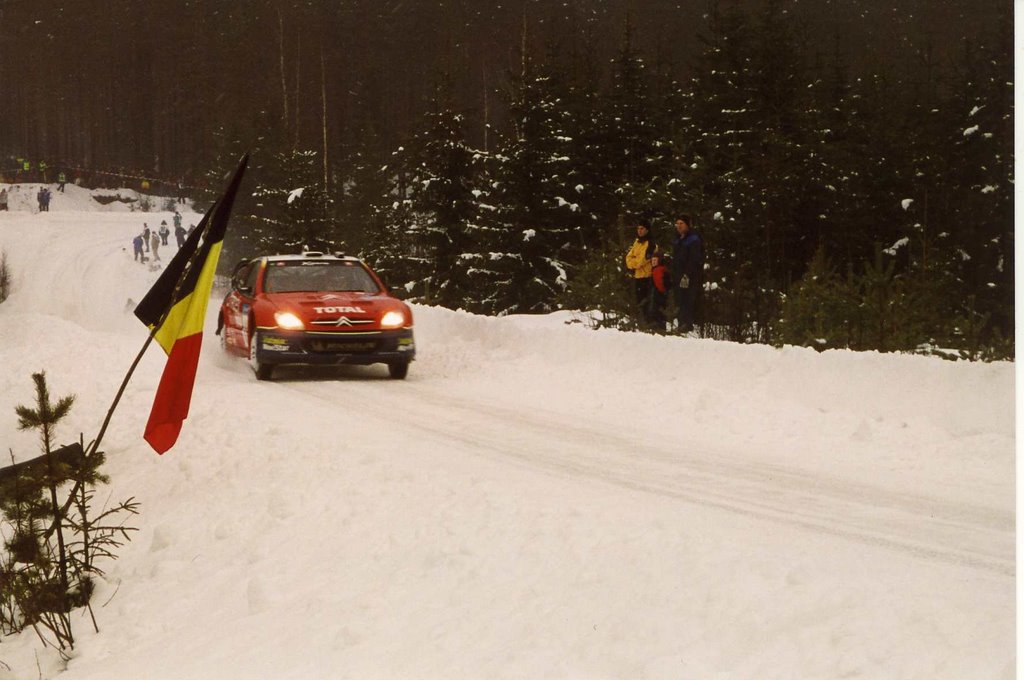 The access road to Hara was much smaller than at other stages, and the further in we went the more treacherous it became. At one point we came to a very steep downhill that begged the question "will we make it back up on the way out?" Only one way to find out....
Once we'd reached the end of the line of parked cars we began another long walk to the stage. We ended up at a crossroads - from the road we came in on, the one to the left and the one going forwards were the stage, whilst to right the road ran off into the forest. We walked up the stage, as the route ran uphill into a clearcut area. Once again we had a good vantage point, watching the cars take the 90 degree left-hander, before charging uphill past us and over the top of the hill through a medium right. During our wait for this stage to start, it began to snow. This may not seem very surprising - we were in Sweden during winter after all, but it was the first time it had snowed on us during a stage. Visibility was reduced, which was a bit of a shame, but it did provide some great wintry atmosphere, as we stood amongst the pine saplings and bonfires.
When all was said and done at Hara, we had one more stage on our itinerary before we would bid the Swedish Rally "goodbye". From Hara it was about 15km south to the village of Sunnemo, where we turned onto a very small country road that would take us to the Hagfors forest stage. The drive was beautiful - no other traffic, and lots of breaks in the forest. Check out the pics on part one of this story - they're from this road. As expected we eventually got to the end of a line of parked cars, and started the walk. This time we faced the longest walk yet, and wondered exactly how far we'd gone when finally we saw a gathering of people next to some emergency vehicles, that indicated a marshall point on the stage. This was at a right-hand hairpin at the end of a very fast section with a couple of yumps. After the corner cars headed slightly uphill, but spectating opportunities up there seemed slim. Instead we headed back down the stage, away from all the marshalls before finding an incredible spot on the outside of a very fast left. In retrospect this was a pretty dangerous place to be, and every time a marshall came by we were made to move back about ten yards. Of course we always moved back to within a few feet of the road.
Once the stage started we discovered that this was the most dramatic viewing spot we'd had throughout the whole event. Cars came by flat in fifth and didn't start braking until after they'd passed us, before the yumps. Each car that passed counted us down to the end of the event, which made for a bittersweet experience. Still, it was a great way to finish our visit to the Swedish Rally, and after the long walk back to the car we headed straight for Stockholm, and a date with a British Airways flight the next morning.
Tuesday, February 06, 2007
A trip to the Swedish Rally, part 3 - Saturday
In the third part of the account of my trip to the 2003 Swedish Rally, it's Saturday, Leg 2, and still bloody freezing...
Being 5am, it was still dark when my father and I woke for day two of the Swedish Rally, and we really only had one thing on our minds: breakfast. On the short walk back to the car from the pizza restaurant the previous evening, we'd passed a small cafe that promised a "smorgasbord" breakfast. This seemed like just the thing to fill the stomachs of a pair of rally spectators and boy were we right: juice, cold meats, bread, cereal, coffee, oatmeal, toast, pastries, even pickled fish (a Swedish staple). We crammed our faces with as much food as we could manage. It was something like the feeding frenzies in March of the Penguins, using the heating effect of metabolism as a defence against the arrid cold conditions. To make the scene even more quaint, the owner of the cafe was a wizened old man whose sole purpose in life seemed to be making sure that every customer left significantly heavier than he arrived. In our case, he succeeded.
The drive out to SS8, Fredriksberg, was a good 45 minutes. It was main road for the most part, until we turned hard right onto a smaller country road that ran alongside one of the long finger lakes that dot the area. At the end of this road a left turn across a bridge brought us past the entrance to the stage itself, and the top competitors were already lined up outside the FIA control zone. Our aim was to take the next access road, where we quickly found a line of cars parked. We figured we should park too, unsure of the distance to the stage. The twenty minutes we had in hand soon evaporated as the walk turned out to be at least 2km. Eventually we reached the stage, and followed the path alongside until we got to a break in the trees. As is common in many industrialized nations, when a major powerline cuts through a forest, a wide swath of trees are cut underneath, and where this particular line crossed the stage we were afforded a terrific view of three crests on a very fast straight stretch of road. We took a moment to note how warm we were in our multiple layers after the very brisk walk from the car, as well as reflect on how incredibly dry the climate was. Despite the snow, there's no moisture. It's too cold for anything to even come close to melting, so any dampness soon freezes to become completely bone dry. This made it remarkably easy to stay warm, more so than in a cold, wet environment like Wales where we ended up later that year.
Once again anticipation was building. This was, after all, only our second forest stage, and the sound of anti-lag crackling off in the distance through the trees is one of motorsport's greatest soundtracks. Cars took about three minutes to get from the startline to our spectator point, and each change in engine pitch made false promises of the car's arrival. Finally the understated white colours of Mikko Hirvonen's 15th-placed Ford Focus leapt out of the trees over a crest, engine momentarily bouncing off the rev limiter as the wheels left the ground. The effect was repeated milliseconds later as the Finn hit the second crest, and then again over the third crest right in front of us. A quick dab of the brakes as he returned to the trees and negotiated a tricky off-camber medium-right corner and then he was gone.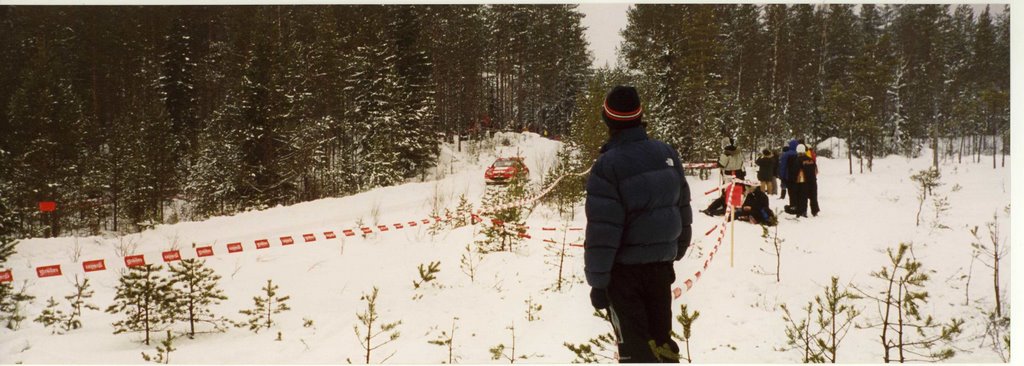 One by one, the top fifteen came through, slowest to fastest. My father and I took turns taking pictures of each other with a rally car in the shot. To the right is me and my co-star, Harri Rovanpera. After the Hyundai of Freddy Loix came charging through we were expecting the bright blue Subaru of Petter Solberg next. As the seconds ticked down to the completion of the one-minute interval there was no sound. Perhaps he'd gone off? Perhaps someone else had gone off and the stage had been halted? Then, with a couple of antilag pops, Solberg emerged from the treeline at high speed, right on schedule. It was then that the penny dropped... the Subarus are whisper-quiet. It was very odd, and somewhat unsettling every time we saw Petter or his team-mate Tommi Makinen throughout the event.
When all was said and done, the most impressive sight of the stage remained young Mikko Hirvonen in the factory Ford Focus. His commitment over the crests was beyond that of anyone else, and he clearly was a boy on a mission.
After all the WRC-spec cars had gone through we headed back along the trail to the road. Before we got there, we noticed a significant break in the stream of slower Group N vehicles, and concluded that the stage had been stopped for some reason. It later turned out that Juuso Pykalisto had crashed in the stage and Harri Rovanpera had run into his stricken car. Go to 1:45 of this video to see the accident (all drivers escaped with only minor injuries).
As we were starting to learn, time was now of the essence. The drivers had SS9 (Lejen), a service period and SS10 (Vargasen) to complete in the time we had to get back to the car, drive to our next spectating point, hop on the complimentary bus from the car-park to the stage and find a place to stand. Luckily we didn't need to get lunch, since we'd bought some sandwiches at a gas station earlier. I was starting to enjoy how spectating a rally was a form of rallying in itself, where navigation, careful driving and impeccable time-keeping were crucial.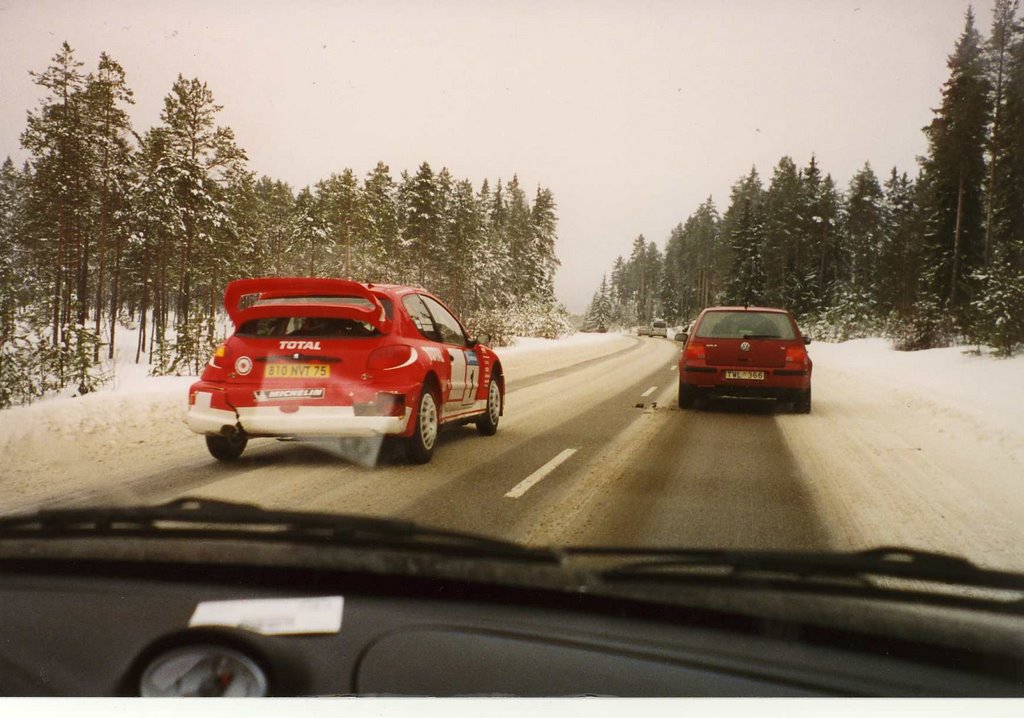 We now faced a problem. All three of the morning's stages were east of Hagfors, and both afternoon stages were west. This meant that EVERYONE was going in the same direction on the same main road. Shortly after we passed the entrance to SS2 (Ramman), about 10 miles east of Hagfors, traffic started to get ugly. The pressure was increasing, and our decision to cut our losses and attempt only two stages was starting to look questionable. As we crawled along, cars started overtaking us, going into the lane of opposing traffic. These were no normal cars however. Check out this picture of Marcus Gronholm going by us. One by one the top rallycars passed us. It was enough to take our minds off the ticking clock, and before long we were at the intersection that was causing the traffic problems. After that, things went much more smoothly, and soon enough we were driving down the access road for SS11, Torntorp. Passing through gently rolling farmland, we parked by the side of a lake, and followed everyone else across a bridge to a bus pickup point. A steady stream of coaches were taking spectators the mile or so down the road to the stage. It was all very calm, well-ordered and comfortable. Our destination was the village of Torntorp. Nothing more than a collection of red-painted houses in the middle of an open field, connected by a road, it was temporarily home to the typical Swedish Rally crowd. Once again Norwegian flags, fires, sausages, vodka and rally-team jackets were the norm and everyone took time to enjoy each other's company as we waited for the stage to kick-off. We got talking to an English couple who were receiving real-time results via SMS, and were able to catch up on the morning's action: by now Marcus had stretched his lead to 35 seconds, and Markko Martin, Colin McRae and Petter Solberg had moved up into 4th, 5th and 6th, with the retirement of Rovanpera.
The very earliest signs of twilight were showing themselves as the first few cars came through. Some were carrying light-pods, the braver ones were not. The openness of the area allowed the cars to be in sight for longer than at any of the previous stages, which was highly enjoyable. A long fast left brought the cars out of the forest, before a few fast left-right curves past the houses, over a crest towards us and then a slower right, which took them back into the trees. My abiding image of Torntorp is of Toni Gardemeister manhandling the mighty Skoda Octavia through those corners, tail flapping around like an old Mark 2 Escort. His hard work was paying off, as he ended the day in seventh.
As darkness fell we returned to Hagfors. My dad was pretty tired but I was motivated to check out service whilst the cars were still there. Since they still had to run the Hagfors Sprint one more time, the timing would be perfect. Snow was falling by the time I got to the airport, and as I moved from one team's area to the next, the cold was starting to dull my senses. I was glad I'd gone to the trouble of seeing the top contenders in service, but was starting to get hungry, damp and cold.
Dinner was a repeat performance of the previous night's pizza and beer. It was hard to turn down such a cosy, tasty experience, and we ended up sitting with an employee of the Uddeholm steel company, sponsors of the whole rally. He was Nigerian, and told a remarkable story of how he came to be in Sweden, and what it was like to work there. After he left, and our glasses were empty, we called it a night, and turned our thoughts to getting a good night's rest. Leg three promised an even tighter schedule, three stages, and a drive back to Stockholm.
Monday, February 05, 2007
A trip to the Swedish Rally, part 2 - Friday
 Yesterday I began the story of my trip to the Swedish Rally in 2003, a 5-day, 6500 mile, sub-zero trip to one of the most remarkable rallies on the planet. When I last left off, my father and I had just reached the town of Hagfors, the hub of the whole rally, halfway through Leg 1...
Once we reached Hagfors we decided to take a look at the service park which was located on the runway of the town's airport, thankfully closed to aircraft for the weekend. Although most of the cars were out on the stages, some of the crews from further down the order were still in service. The buzz in the air was palpable, and we picked up the results of the first three stages of the rally before heading into town to meet up with our house host.
Our accomodations for the next two nights consisted of a small cottage with one bedroom - basically a freestanding apartment. Our host Maria was leaving to stay with friends whilst we were there. She was happy to move out in order to make some money off the rally and we were happy to have a comfortable place to rest our heads.
Time had passed us by whilst we were finding the apartment and grabbing our burger lunch, so we dashed out of town to catch SS4, Malta. This was the closest forest stage to Hagfors and we were there in a matter of minutes. Luckily the rally had slipped slightly off schedule, so as we ran from the parking area across a snowy field to the spectator area, we were unaware that time was on our side. Moments later we reached the treeline, climbed a bank and found ourselves in the middle of a massive crowd of bundled up rally-goers. Flags were flying, fires were burning, songs of support for various drivers were being sung and everywhere was the delicious smell of sausages cooking. So this was what the Swedish Rally was like! We dashed across the road and staked out a spot on the inside of a medium left-hander over a crest, perhaps 30 seconds down from the start line. The sound of a helicopter was suddenly present, and then the unmistakable crack-pop-crack of the anti-lag system of a rallycar at the startline of a special stage. A roar of engine revs signalled the start of the stage, and the only clue we had of the proximity of the car was the helicopter - engine noise was bouncing off trees making it impossible to tell how much longer we had to wait.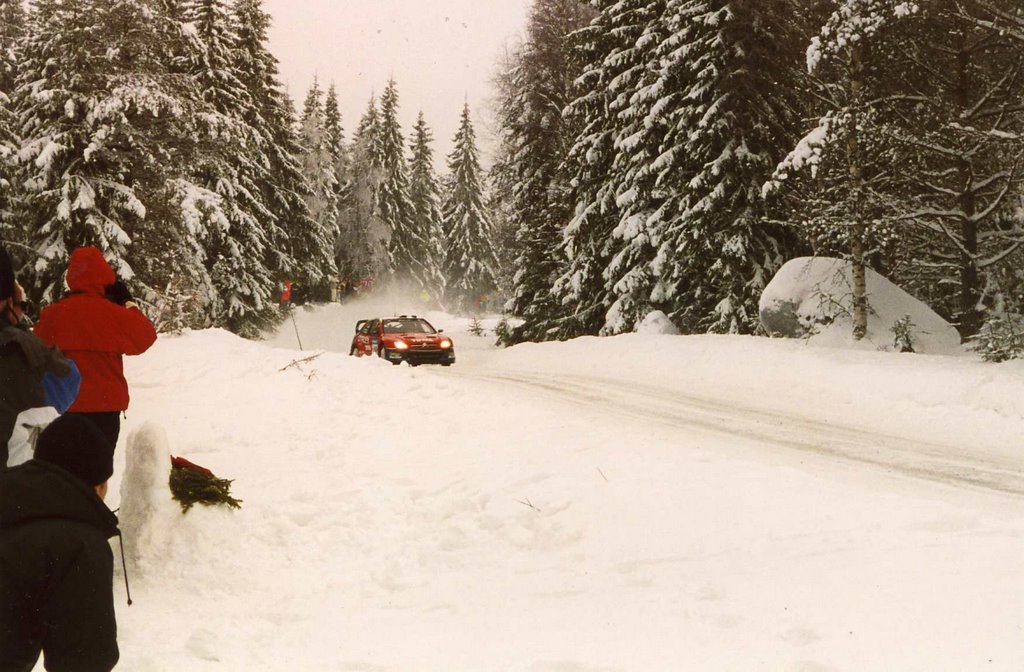 The clock ticked. My heart raced. I hadn't been to a WRC event since 1986 and back then I wasn't anywhere near as passionate about the sport as I had become by 2003. The crowds cheered. Then the helicopter was overhead, the closest marshall blew his whistle and around the corner came a flying, barking, snow-throwing red monster, a Citroen Xsara in the hands of Sebastien Loeb. The car settled itself after the crest, cameras flashed, and then the Frenchman muscled the Xsara into the next bend, a right hander that emerged into a clearing. Then he was gone.
My father and I looked at each other, speechless. Nothing would ever be quite the same after that. A moment of irresponsible tomfoolery had gotten me infected with a powerful disease for which no cure existed.
Fifty seconds later it started all over again. This time the cheers were louder, the car faster and more sideways. This was Colin McRae, and there was no doubt that he was remarkably exciting to watch, like the energetic frontman of your favorite band putting on a superb show.
The next 45 minutes passed like a series of small sumo tournaments. Step into the ring, determined to withstand the inevitable power, and every single time get pushed out, landing on your ass, desperate for another go.
As we edged further down the order the cars slowed, the crowd thinned, the singing and chanting became less emphatic. Time to go, but the inevitable question was "go where"? A growing suspicion I had had during my lengthy preparations was now confirmed: you cannot watch every stage. How I had thought it would be possible I will never know, but as the crews headed off to SS5, Sagan (which was ultimately cancelled due to an accident involving Francois Duval), we returned to Hagfors. The final stage of the day was the Hagfors Sprint, located around a local sports complex. Not quite a Superspecial, since crews ran one-by-one, but a compact stage easily accessed by spectators. In fact, the ease of access turned out to be a guarantee of giant crowds. We struggled to find a decent spot to view the top runners and ended up next to the rowdiest group of Estonians you could ever hope (?) to meet. Once again the sausages were cooking and the fans were singing ("Tooooommy Maaaa-kin-en, Tom-my Mak-in-en"). The startline was visible from our vantage point, and we could see the crews lining up, now with huge banks of lights fitted the front of their vehicles. Finally it was time. With a flick of a switch Loeb illuminated six HID lights, turning the slate-grey twilight into a stark vision of bright, bright white before disappearing off around the back of the sports buildings. Two minutes later he arrived at our part of the stage, snow flying off the studded tyres, flames licking out from the exhaust and those piercing xenons destroying our night vision. It was a dramatic, visceral experience, our senses heightened by the bitter cold.
The completed passage of the top drivers freed up the crowds enough for us to move to another part of the stage, and we soon found a way to get very close to the actual stage road on the other side of the complex. Although these crews were slower, the proximity was thrilling and we watched a number of drivers (who were extremely talented in their own right) negotiate the tricky sprint.
Eventually the cold was victorious, despite our triple layers, laying claim to our toes first. Reluctantly we headed for the car, and five minutes later crashed out in the warm surroundings of our apartment. The physical demands of the day had taken their toll and we relaxed in front of the TV, before growling stomachs finally motivated us enough to seek out some dinner. Back into the egg-shaped Ford, we headed for the centre of the pretty little town. On one side of the town square we came across a pizza restaurant, crammed full of beer-swilling rally fans, ravenous from a day on the stages. We decided to get in line rather than try to find another restaurant, and were well-rewarded for the decision. Before long we found a place at one of the benches with a couple of other Brits, and we talked motorsport and drank Heinekins whilst we waited for the pies to arrive. When they finally did we made quick work of them, and sat in a warm, self-congratulatory glow of achievement. Before leaving we looked at the itinerary for Leg two, and started to formulate a plan for the day. We decided to aim high, confident in my father's driving skills and my navigational abilities, and planned for three stages. Sadly, they didn't include Vargasen, the site of "Colin's Crest", named for the incredible air that Colin McRae achieved at that spot in previous years. Still, we were going to head for Fredriksberg, one of rallying's most fearsome stages, up there with Finland's Ouninpohja and Wales' Resolfen.
A warm bed beckoned and an early morning loomed.
Sunday, February 04, 2007
A trip to the Swedish Rally, part 1 - Getting there
 It was -15 degrees celsius, dark, and we were in Sweden in February waiting for a bus, after travelling for eighteen hours. Anyone who has ever questioned my passion for motorsport finally had nothing to say...
Every year around this time I think back to 2003, when I journeyed with my father to the WRC Swedish Rally. As the days tick down to this year's Swedish, I'll do my best to recount that remarkable trip...
United Airlines had been offering incredible deals on trans-Atlantic airfare, and I managed to pick up return flights to London for about $250 each. A quick hop from London to Stockholm for a paltry $70 and the decision was made: we'd be going to the Swedish Rally. However, a lack of spare vacation days meant that we were going to have to arrive at the rally on the Friday morning, making for a very tight schedule: we'd be leaving San Francisco on Wednesday and would arrive back on home soil a mere five days later.
The only difficulty, as is typical with last minute trips to major sporting events, was securing accomodation. After a frustating couple of days contacting hotels in both the host city of Karlstad (70km from the stages) and Hagfors, site of the service park and central to the stages, I was still empty handed. Luckily the local tourist board had a list of homestays, and we ended up with a relatively cheap house for the three nights we'd be in Hagfors. Interestingly, the method of using a local agent to find a homestay has worked well for us at Le Mans as well.
Anyone who knows me well knows that I'm very thorough when it comes to trip-planning. My biggest concern was how we'd be able to find our way around, a crucial detail when you're up against the clock trying to get from stage to stage on an efficiently-run rally. In the absence of any decent maps of central Sweden I opted to print out some maps from the internet, and was able to superimpose the rally route and access roads from smaller maps on the rally's website. Suitably prepped, we were ready to go.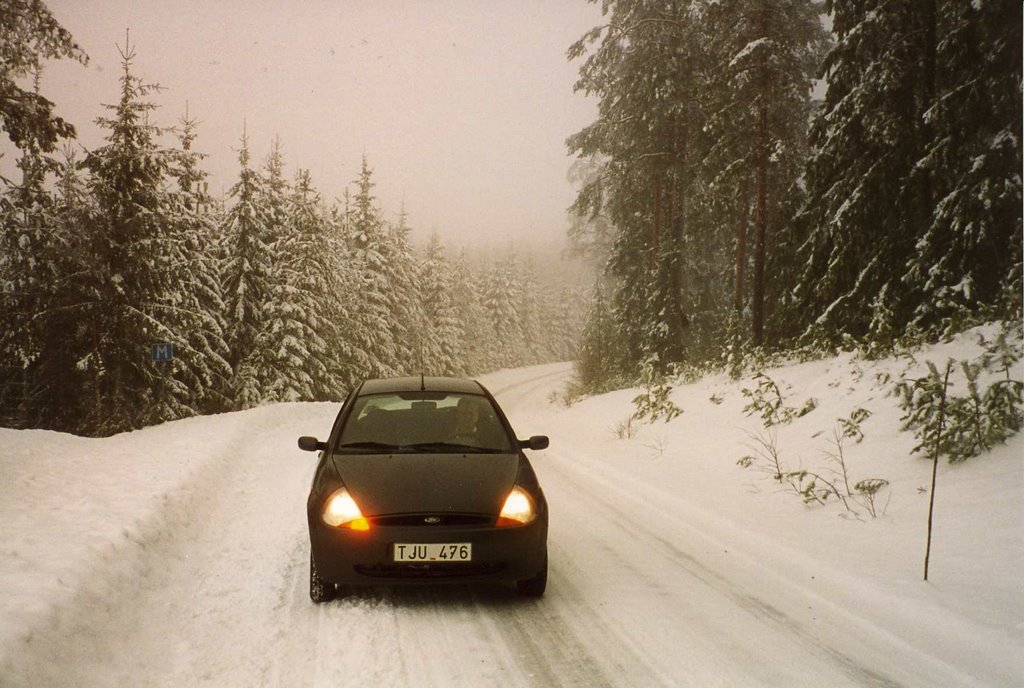 Nothing can prepare you for the sheer cold of Scandinavia in winter, and as the doors of the airport terminal opened in Stockholm we knew that this was going to be unlike any motorsport event we'd ever been to. As the clock ticked by we wondered if the car rental reservation that I'd made was for real. Finally the shuttle arrived and we ended up at Avis' office. The first car that we were given, an Opel Corsa, had its parking brake frozen in place, so we were given a different car, a Ford Ka. Although the car was smaller, it proved to be fortuitous, as the Ka performed magnificently over the next four days.
I had made arrangements to spend the Thursday evening with a friend of a friend in Stockholm, but the confusing nature of the city built on countless islands meant that we never made it, and ended up instead at one of the numerous "Formula 1" motels that dot mainland Europe. After checking in to the tiny room, we braved the cold in order to walk to the pizza restaurant across the street. As you might expect, a cold beer would be high on the list of "must-haves" after such a lengthy journey, so it didn't take long for us to discover the harsh reality of Swedish alcohol taxation. Heinekins were $9 apiece! It turns out that although $9 is expensive, it's not prohibitive for either me or my father...
Friday came early, since we had to get to Hagfors by lunchtime, a not insignificant task given the snowy roads, distance and possibility of crowded roads. We took advantage of the delicious free breakfast then hit the road. Once beyond the extensive sprawl of Sweden's capital we finally got a look at the beautiful Swedish countryside. The rolling hills were covered in a deep layer of snow, apparently no longer a sure thing in the Central Swedish winter these days.
Shortly before the regional capital of Karlstad, we took a right turn onto a smaller country road. Almost immediately the landscape became hillier, and the snow started to get thicker on the ground. We started to see evidence of the same kind of roadside snowbanks that the WRC crews would be using to their advantage on the actual stages. Fifty kilometers later we turned right onto a main road which five minutes later brought us into the town of Hagfors, home of the Swedish Rally's service park - which is where we were headed first.....
Monday, January 22, 2007
Bored
This weekend was probably the first decent weekend of racing of 2007. The Dakar Rally was finishing up, the WRC opened its season and A1GP returned from its break. But none of these events were even remotely exciting.
Seb Loeb and Citroen won again at the Monte Carlo Rally, despite having a new car (this always creates the potential for reliability issues), and to make things worse, his team-mate Dani Sordo came second. The stages were devoid of unpredictable ice and snow, like usual, making it more like watching the old San Remo Rally. The final insult was the third leg which featured one measly stage, a superspecial on the streets of Monaco. They didn't even utilize the whole F1 track, and missed out the best bits (Casino Square, Lowes hairpin and the tunnel). LAME.
The Dakar Rally reached the famed Lac Rose, with no major drama. I'll admit that the final stage around the lake is always a processional humdrum affair so I wasn't surprised. What was surprising was that this Dakar seemed rather short of its own excitement for the whole 17 days. Oh sure, there was the dramatic crash and retirement of motorcycle leader Marc Coma, two days from the end, as well as the woes of Volkswagen after the rest day, but apart from that it was a pretty tame affair, with the robotically reliable Stephane Peterhansel taking a ninth victory, and seventh in a row for Mitsubishi. To be honest, I still think the best Dakar was a few years back where they went across the top of Africa and ended in Sharm El Sheikh in Egypt.
Finally, Germany won in A1GP, again. This time they took both wins at Taupo, New Zealand.
Let's hope that the season starts to throw out some more interesting races and results soon. So, Chip Ganassi, don't you dare win the Rolex 24 Hours of Daytona next weekend.
Thursday, January 18, 2007
WRC Preview
 With what must be the shortest winter break of any major motorsport, the World Rally Championship returns to action this weekend with the 75th running of the Monte Carlo Rally. Typically this event features unpredictable surfaces and weather, but the winner in the past few years has been anything but - if it wasn't for a slight slip on the first leg last year, Sebastien Loeb would have made it four wins in a row. Come to think of it, a small infringement in 2002 (tyre changing in parc ferme) was all that stopped Loeb from starting his run of victories one year earlier.
The Monte is not the best place to get a feel for the form of the year's WRC entrants due its unique nature, but that shouldn't stop us taking a look at the main contenders for 2007.
Citroen Total World Rally Team: Citroen return in full-factory guise this year with a new car, the C4, and it's this detail that casts some doubt over whether they'll be as dominant as they have been in the past. Admittedly the car has been testing for a year now, so should be well-developed, but no matter how hard a team tries, testing will never replicate the rigours of competition. They have possibly the greatest rally driver of all time behind the wheel of the 1 car, Seb Loeb, so if anyone can maximize the C4's performance, it's him. Joining him is the extremely fast Dani Sordo, whose development is mirroring Loeb's: initially fast on tarmac, improving on gravel but having some big spills in the process. Look at Loeb's results in 2002 to get an idea of where Sordo will finish.
BP Ford World Rally Team: Marcus Gronholm and Mikko Hirvonen both performed extremely well in 2006, and there's no reason to doubt a repeat performance in 2007. Now that Mikko has learnt consistency, the big question is how hard will he push Marcus this year? The latest version of the Focus should have gotten past any teething troubles, unlike its Citroen rival, so expect a much closer battle this year.
Subaru World Rally Team: Subaru had their worst season since 1994 last year, and many people blamed that on the Pirelli tyres that only Subaru was using. Now they've switched to the same BF Goodrich rubber that everyone else is on, so the playing field is theoretically level again. This should return Petter Solberg to a competitive pace, and give Chris Atkinson no more excuses. It's a make or break year for the Aussie. I'm voting for "break".
OMV Kronos Citroen World Rally Team: In a marriage of convenience Kronos (without drivers or sponsors but with cars) joins up with Manfred Stohl (flush with OMV sponsorship but without a drive). This leaves Stohl's previous team, Bozian Peugeot, somewhat in the wilderness, and it is undetermined what they'll be doing in 2007. Kronos can expect a solid year with occasional podiums and consistent points finishes, especially with Swedish hotshot Daniel Carlsson in the second car for a number of events. Carlsson turned in an exceptional performance in a Mitsubishi at the Swedish Rally last year but couldn't find the funding for any additional drives. The Belgian outfit will be a significantly smaller operation than last year, when they functioned as a quasi-factory Citroen team.
Stobart M-Sport Ford Rally Team: Stobart return as Ford's "B" team, and rather sensibly have decided to not have Matthew Wilson be nominated for manufacturer points. That duty will fall to new signing Henning Solberg and young, fast Finn Jari-Matti Latvala. Wilson continues, but as a third driver. Solberg should be worth some mid-points finishes and if luck goes his way might pick up a podium. Latvala is the more exciting prospect - a 5th on Rally GB last year proved his talent, and he's got previous experience with Ford in the WRC and British championship. What may hold the team back a little is the fact they'll be running with one-year-old cars.
Munchi's Ford Rally Team: This will be Ford's third team, funded with sponsorship from Luis-Perez Companc. Partnering the beaver-like Argentinian will be Juan-Pablo Raies. Companc's beaver impressions went beyond appearance last year - he seemed to be very good at finding trees to munch on, and when he wasn't crashing, he was slow. The Red Bull Skoda team may be gone, but Munchi's will be a perfect successor for the title of "basement team". Incidentally, Munchi's is an Argentinian ice cream manufacturer, and their website shows some very tasty treats...
The others: We'll see the usual supporting cast this year, headed by Mitsubishi, who have committed to three events but will likely run most of the season, except perhaps for the long-haul rallies. Toni Gardemeister will be very quick, as usual, and will almost certainly upset the six manufacturer teams from time to time. Team-mate Xavier Pons will be less of a threat but has a full-season's experience to help him.
Irishman Gareth MacHale plans on doing 11 events, and will swap his venerable Focus WRC03 for something newer after Monte Carlo.
Khalid Al-Qassimi's plans finally came together, with a Subaru Impreza WRC his weapon of choice for a full-season campaign.
Gigi Galli has once again secured backing from Pirelli and will compete in eight rallies. He'll be using one of the PH Sport Citroen Xsaras this time around, possibly the chassis used so successfully by Gardemeister last year.
Other drivers we can expect to see from time to time include Francois Duval, Guy Wilks, Thomas Schie, Jan Kopecky, Janne Tuohino, Jussi Valimaki and Stephane Sarrazin.
Most tantalizing of all though will be the arrival of Suzuki towards the end of the year, and Travis Pastrana at three unnamed events in a Group N Subaru. Both new arrivals will be a taste of things to come in 2008 and beyond.
Tuesday, January 16, 2007
Mitsubishi Mystery Part 2
No sooner do I write a nice, detailed analysis of the current Mitsubishi WRC situation than Mitsu put out a press release clarifying things...
So it turns out that this will simply be a privateer deal, along the lines of what Daniel Carlsson and Gigi Galli had last year. As for the details of what exactly happened behind the scenes between December 14th and now, well, nothing has yet emerged, and probably won't.
Sunday, January 14, 2007
Mitsubishi mystery
Back on December 14th we first heard whispers of a new Mitsubishi entry to the WRC. The story went that Toni Gardemeister and Khalid Al-Qassami would be run by MMSP in 2005 Lancer WRC cars. Given the line-up, it seemed clear that financial backing was coming from the Middle East. The rumour seemed to be confirmed when WRC.com, not typically prone to reporting hearsay and rumour, posted the story the following day.
Within hours WRC.com removed the news item, and by 12/18 Mitsubishi had announced it would not be returning in 2007 in an official capacity as a "manufacturer" entry. However, it still seemed as though a team would run the two cars with the same two drivers. Middle East money still seemed to be heavily involved.
Two days later, the entry list for the Monte Carlo Rally was released and the unnamed Mitsu team was on there, specifically listing Gardemeister and Al-Qassami in Lancer WRC05s. Nine days after that the list of Manufacturer entries in the WRC did not list a Mitsubishi team.
The Swedish Rally entry list was released on January 5th, and featured the same drivers listed as MMSP (Mitsubshi Motor Sports Program), albeit not as Manufacturer entries.
The confusing story became even more confusing when www.rally.gr broke news on Jan 9th that Mitsubishi were not allowing the team to use its cars or its name. We did learn that the team was to be called the "Fly Emirates World Rally Team", but whether it would be able to continue, perhaps with a pair of Subaru WRC cars, remained a big question. So... back to square one.
Three days later, the team appeared to be back on track. Sort of. The Rally Norway entry list listed Gardemeister in a Lancer, this time alongside Citroen refugee Xevi Pons and Juha Haaninen, whilst Al-Qassami was listed in an Impreza WRC as the "Abu Dhabi Rally Team". It appeared as though Al-Qassami had grown impatient and taken his money elsewhere, whilst whoever was behind the Mitsu operation pushed forward.
A story on WRC.com about Xavier Pons' role seemed to answer that "who" question. MMSP's ops manager confirmed that the team was no pipedream, but was looking to replace Al-Qassami's name due to the Saudi drivers' departure.
So what do we know now? I would guess that something like this happened: Mitsubishi wanted to return to the championship in a very limited way, not as a manufacturer, but on an event-by-event basis. When MMSP went about putting the program together they brought in Al-Qassami to help offset costs. A probable lack of communication between Mitsubishi and MMSP meant that there was no unified message to the media, one side believing it to be a full assault on the championship as a manufacturer, the other insisting it would not be (and that it would not support such an effort).
The good news is that we will see Mitsubishi in the WRC in 2007, with Toni Gardemeister and other top drivers, along with Khalid Al-Qassami in his own Subaru team. Any time that there's additional quality entries in the WRC, that's a good thing.


